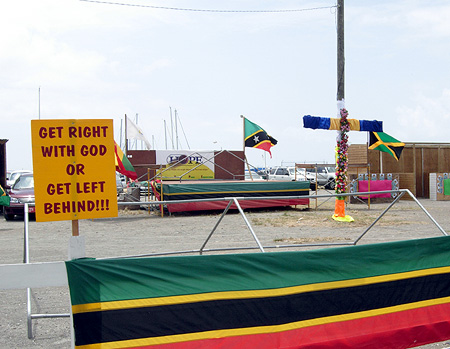
Montserrat

I’m way behind in posting stuff from this trip, a situation which won’t be changing anytime soon, so bear with me.

But Montserrat. Man.

When I was in college, I first heard of Montserrat as the tropical haven where Beatles producer George Martin had set up a recording studio frequented by everyone from The Police to Elton John to Stevie Wonder to Lou Reed.

I read a little about it, and it sounded fantastic, a faraway and exotic place I never imagined I’d see.
Active Image

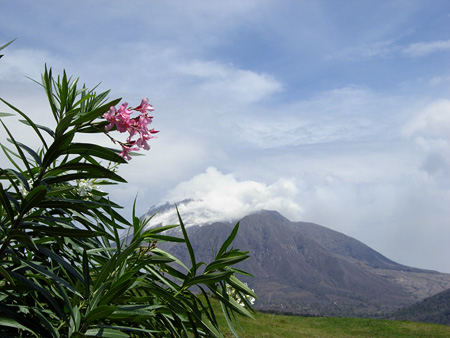
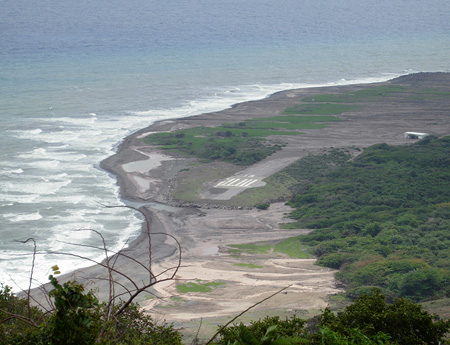
Unfortunately, the island was largely wiped out by its long-dormant volcano in 1995. The capital of Plymouth was completely engulfed, the airport was destroyed, and about two-thirds of the residents left and never came back.
Active Image

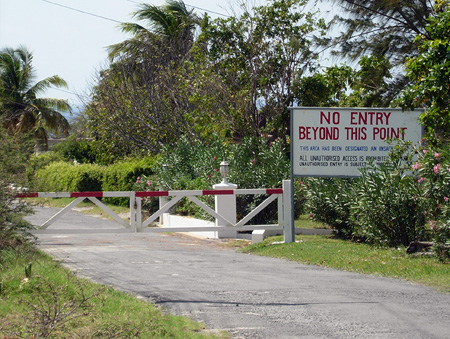
These days, most of the island is a closed-off Forbidden Zone (actually, they call it the "exclusion zone," but same thing). In the last few months, the volcano has even started to get all rumbly again.
Active Image

Still the remaining locals are doing their best to make a go of it, hoping to market (a) the island’s lush beauty to adventurous tourists, and (b) large swaths of uninhabitable rock as building supplies to less unfortunate islands. I figured what the hell and flew over.

I was one of only three passengers on the flight in. This didn’t bode well for the whole tourism thing.

Active Image

The island truly is gorgeous. In its day, it must have been one of the most beautiful places on earth. On the west coast north of the exclusion zone, there are still barely-touristed beaches you can spend some of the nicest days of your life on.
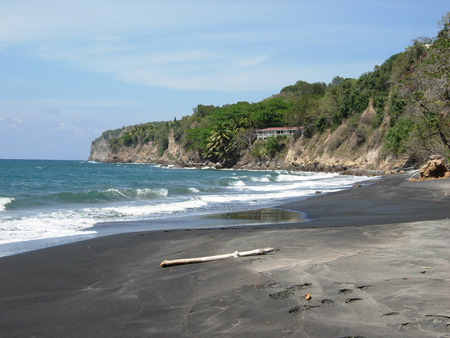
Active Image

You can even spot occasional moments of marvelous dark humor.
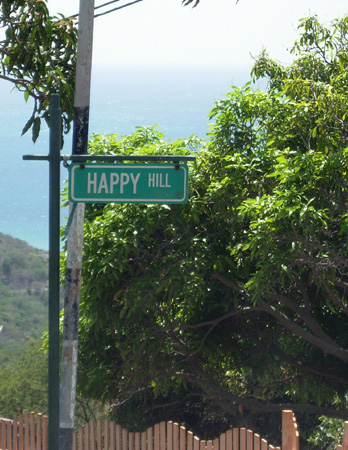
Active Image

But what the travel guides I read never mentioned — but common sense should have told me — is that most of the people you meet in Montserrat are still the same survivors who lost everything. Their lives have never been the same. And most of their families have moved away. There is an emptiness here.

And when the volcano is in sight and a resident raises their eyes, there’s often a haunted look on their face that soon tries to reproduce itself on yours.

And on an island this small, it’s impossible not to be reminded.
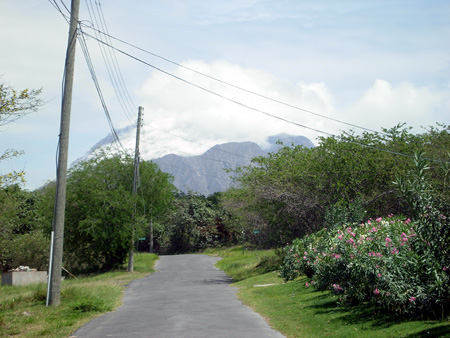
Active Image

If you’re in the Caribbean, it’s worth a visit and a stay. You’ll see beautiful stuff every waking minute, your memories will ache with the beauty and sadness, and you’ll be helping nice people who could use a break.

Montserrat. Man.

Angelica

Your current reading assignment:

If you’d like to see why, check out the reviews. The Washington Post even calls Arthur "one of the best writers in America."

Full disclosure: Arthur’s an old friend from Jeopardy! — those of you who have read Prisoner of Trebekistan will remember his quiet intensity, I’m sure — and he was kind enough to blurb the book when it came out.

But once you start reading Arthur’s stuff, you’ll see why I’m recommending it. Arthur’s sense of humor is beyond wicked, and his control of his craft is breathtaking.

Detroit News visits Trebekistan

Prisoner of Trebekistan gets a nod in this Detroit News story about the way quiz shows seem to have changed over the years.

I’d like to elaborate, btw.  There’s a frequent charge that our country has dumbed down, and if you compare the questions currently asked on Are You Smarter Than a Fifth Grader? (which I didn’t even know existed) to the questions asked on, say, Twenty-One, there seems to be a prima facie case.

And granted, there are days when I think the future of quiz shows will be a show called Who Can Push The Big Red Button, with ten beautiful girls standing next to ten three-foot-wide buttons, nine of which are blue.  Pushing the lone red button gets the contestant $50,000.  Can the contestant do it?  Join host Don Imus and find out.

But the big-money questions on Jeopardy! are still pretty damn tough.  The big-money Millionaire questions are, too.  Just like in the 1950s.  I think shows like Deal Or No Deal don’t tell us anything about any possible changes in our knowledge or intelligence; people have enjoyed games of chance since long before TV was invented.  Deal Or No Deal’s current popularity may only tell us that our culture intuits luck as a factor in economic success a bit more, and if so, that would be a logical reflection of some of the structural changes we’ve seen in the last quarter-century or so.

There was a time when working-class people like my dad could very predictably get a good, stable job, buy a home, and have a relatively stable life, purely through hard work, which was extremely well-valued.  Not quite so much anymore.  Interesting to notice that Deal Or No Deal’s contestants seem to be consistently working class.

Talking out of my ass, as usual.  But that’s what I think, anyway.

Oh, and none of this is in Prisoner of Trebekistan.  Which is barely even about Jeopardy! in some ways.  But a lot of you know that already.

Uh-oh

This was a little disturbing —

A big public display about how the Rapture is gonna come any second…

Active Image

And everybody is already gone.

I guess if you’re reading this, we’re all gonna tribulate together.